
Two answers to the same tired fireplace
Plenty of owners in Westminster reach the same point. Hauling wood, sweeping ash and watching for no-burn days has become more trouble than the fire is worth, yet the brick opening is still handsome. The question turns into which kind of gas fire belongs in it. The two usual answers look alike in a showroom photo and behave very differently in a living room on a January night.
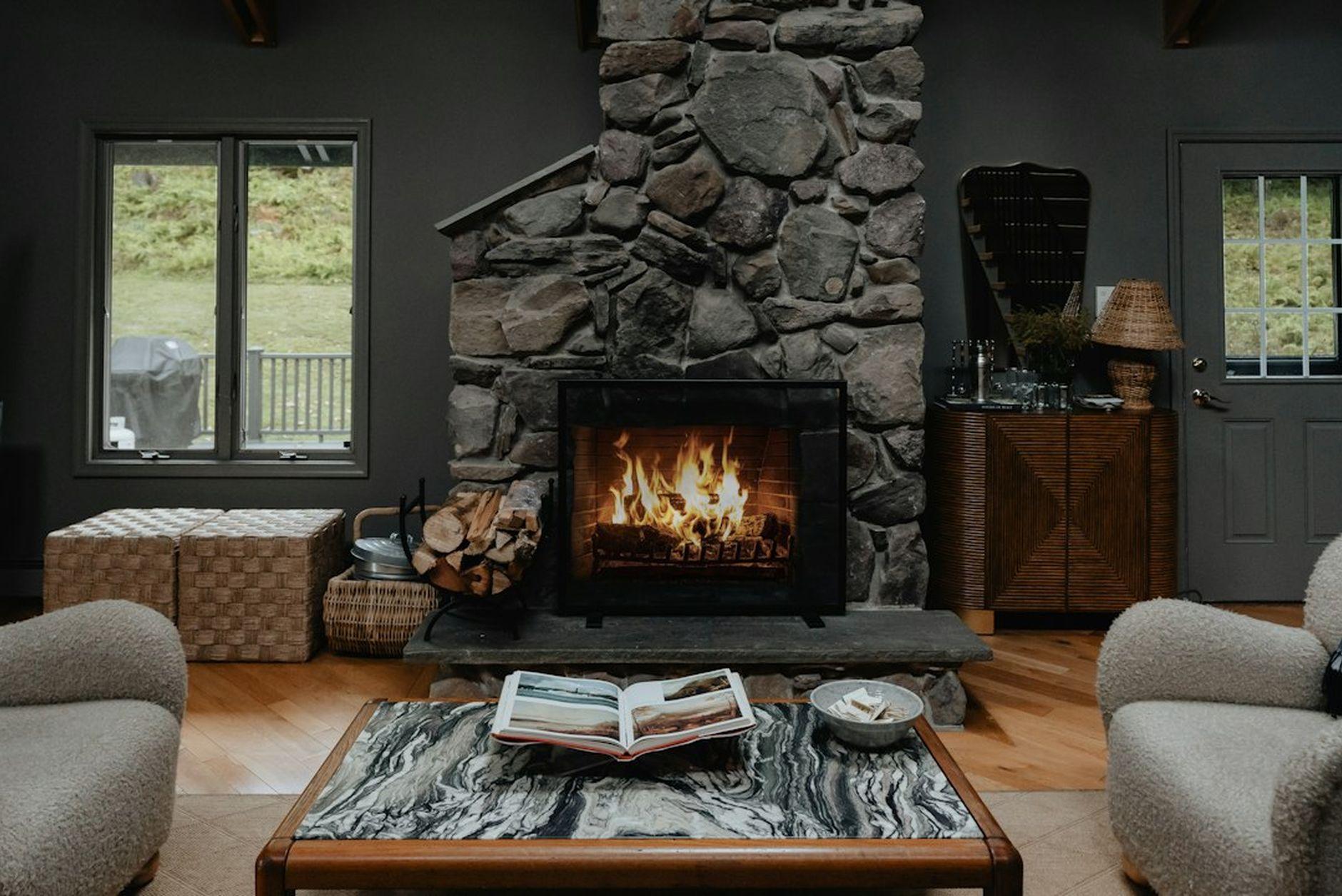
A log set is a burner with ceramic logs arranged on the existing firebox floor. The opening stays open, or sits behind the glass doors you already have. The flame is tall, yellow and lazy, much like a wood fire.
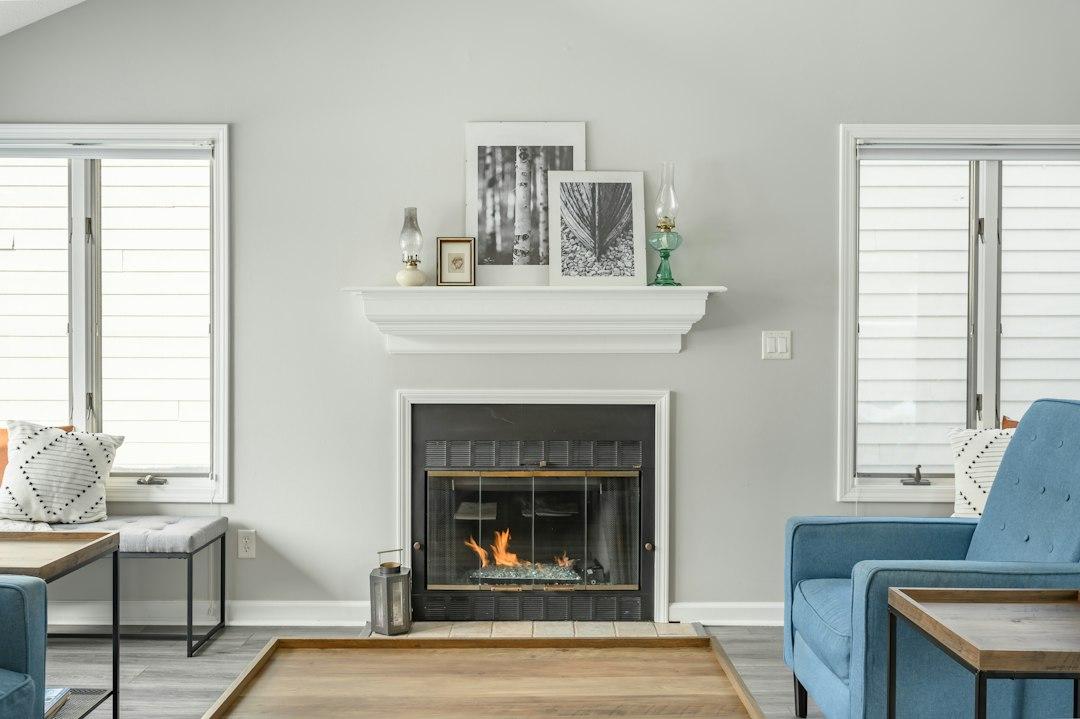
An insert is a sealed steel box that slides into the opening. It has a glass front, its own vent pipe to the top of the chimney, and a blower behind a trim panel. The flame sits behind the glass and the box pushes warmth out into the room.
How they compare once they are in
| Log set | Insert | |
|---|---|---|
| Look | Open flame in the original firebox | Flame behind glass, framed by a steel trim |
| Warmth | Mostly for looks; much of the heat goes up the flue | Built to heat; glass and blower send warmth into the room |
| Face of the fireplace | Left as it is | New trim panel, often the moment to reface around it |
| Exhaust | Through the open masonry flue, damper locked partly open | Through its own sealed pipe to the chimney top |
| Room air | Pulled up the chimney while it burns | Kept in the room; the unit breathes outside air |
Neither choice is wrong. Owners who light the fireplace on a handful of cool evenings and want the look of real flames often prefer logs. Owners who want the fireplace to warm a cold slab-floor living room usually end up happier with an insert.
The look around the glass
An insert changes the face of the fireplace more than most people expect. The trim panel covers the edge of the brick opening, and on a narrow surround it can crowd the brick. This is where the remodel side of the job comes in. Some owners keep the brick and choose the slimmest trim the maker offers. Others reface at the same time with large porcelain, honed stone or a plaster surround, so the box reads as built in rather than added later.
A log set leaves the face exactly as it is, so a refacing is optional. If the brick is dark and sooty, a new set on its own can look out of place, and owners often pair it with a cleaned or limewashed face.
What decides the price
Inserts carry a published range on our list: $2,900 to $5,850, fitted and vented in the opening you already have. Where a job lands in that range depends on:
- how large a unit the opening can take, which sets the model and its output;
- the front you choose: a thin black frame, a wide surround, a decorative screen;
- the length of the vent run to the chimney top, and how many bends the old flue makes;
- whether a gas line already reaches the hearth, and how far the blower is from a power outlet;
- what the camera shows inside the flue.
Log sets are not on our price list. They range from a simple burner with a few logs to a deep, detailed set with glowing ember media, and the written figure follows the set you pick once we have measured the firebox.
Before either one goes in, the flue gets a Level 2 inspection at $410, since a change of fuel is one of the moments NFPA 211 asks for the deeper look. If years of wood fires have left heavy deposits, a sweep from $440 comes first.
Send the quote form with the rough size of your opening and which of the two you lean toward. We call back to book the measuring and camera visit, and if you are still undecided the written quote prices both side by side.
Warmth, cost to run and burn days
Westminster is inside the South Coast AQMD, and under Rule 445 the district can halt wood burning on winter days with bad air. Gas fireplaces sit outside those wood-burning limits, so either choice lets you light the fireplace on a no-burn day.
The difference shows up in where the heat goes. An insert puts most of the gas it burns into the room as warmth. A vented log set sends a large share of it up the chimney with the exhaust, and while it burns it also draws warm room air up the flue. If you plan to run the fireplace for hours on cold evenings, that difference adds up on the gas bill.
Which we would suggest
- A few fires a year, mainly for the look, and you love the brick as it is: logs.
- You want real heat, the room runs cold, or the firebrick is worn: an insert, which also takes the direct flame off the old lining.
- A shallow or oddly sized opening: we measure before anyone chooses, because some openings take only one of the two.
- A factory-built metal fireplace: only products listed for that model can go in, so the label inside the box decides.
The details of each are on our pages for fireplace inserts and gas log sets. If you go the insert route, the liner behind it is worth reading too.
Questions we hear
Can a log set go behind my existing glass doors? Often, as long as the doors are suitable for gas use and the damper stays fixed partly open. We check both on the visit.
Will an insert make the fireplace look smaller? The box sits inside the opening, so the brick wall stays the same size. The trim adds a frame a few inches wide around the glass.
Can I switch from logs to an insert later? Yes. The gas line usually stays where it is, and the insert adds its own vent pipe when it goes in.
Choosing for a Westminster living room
If you are weighing the two, our contact page is the place to begin. Tell us a little about the room and how you use the fireplace, and we will set up the visit.
Want This Done on Your Own Fireplace?
Bancroft Chimney Works measures the wall, brings tile and stone samples and checks the firebox before writing a scope. Homes in Westminster, Garden Grove, Huntington Beach and Lakewood are all within reach.