
A mark on a new finish
Few things sting like a brown tide line creeping across a plaster surround you paid for last spring, or a dark bloom spreading through a pale limestone mantel. In Westminster it usually appears after the first proper winter storm, often one with wind behind it, and it tends to show up just where the eye goes first: above the shelf, or where the chimney breast meets the ceiling.
The stain is where the water came out, not where it went in. Brick carries moisture downward through its own body, and the first place it can show is often the finish laid over that brick inside the room. That is why stopping it starts on the roof.
The ways water reaches the breast
Think of the chimney as a column with a top, four sides and a hollow middle. Water can arrive through any of them:
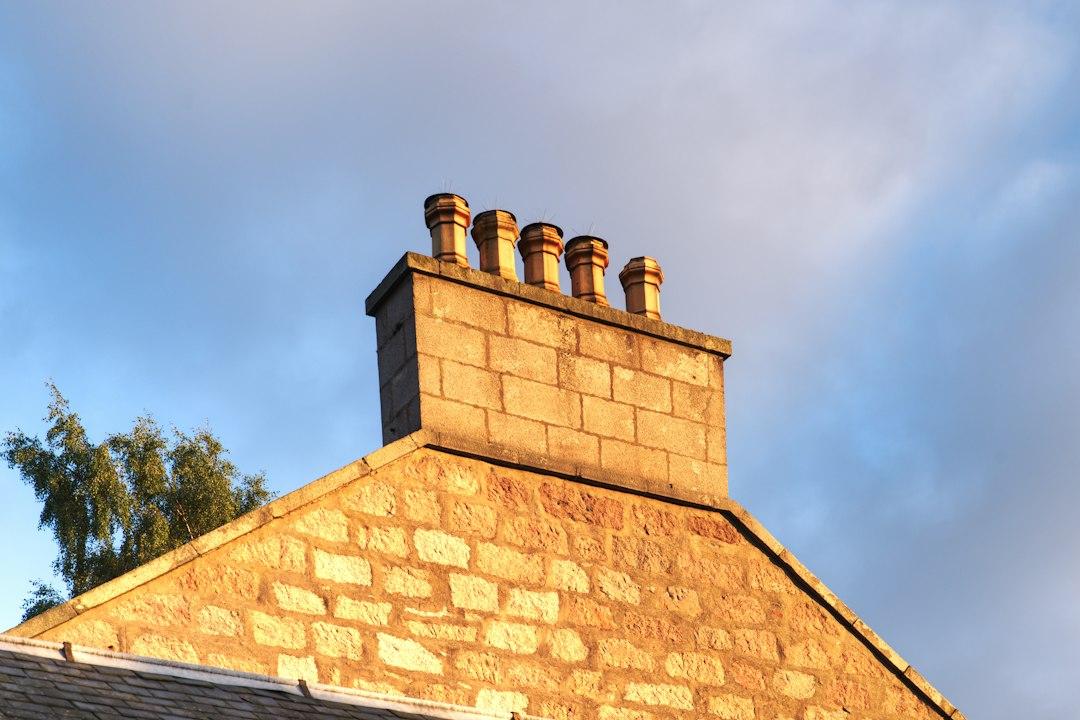
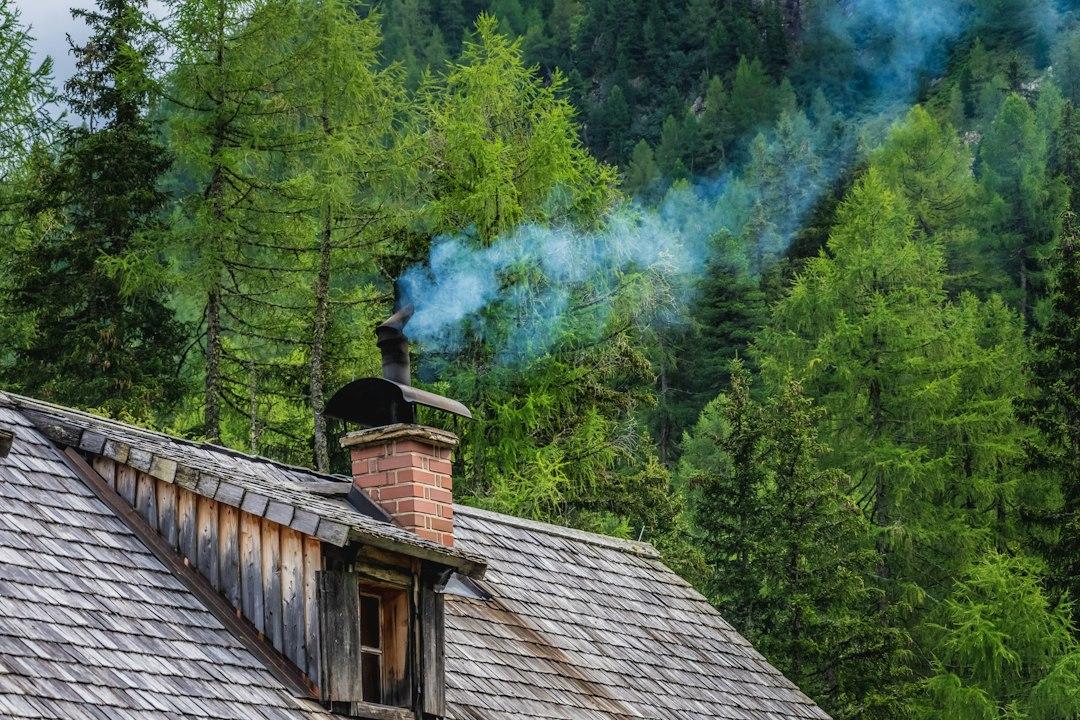
- The top. A broken or thin concrete slab around the flue lets rain soak straight into the brick below it. An open flue with no cap takes rain down its middle.
- Where it meets the roof. The metal that seals the joint between brick and roofing lifts, rusts or was never let into the brick properly.
- The uphill side. On a wide chimney, water and leaves collect behind the stack unless a small peaked diverter splits the flow.
- The faces. Worn mortar and soft old brick drink rain in a long storm.
- From inside. A gas appliance venting into an oversized old flue can leave enough condensation to mark the wall. This one shows up even in dry weeks.
More than one of these is often at work. That is why a single patch so often fails.
Finding the real source
We start on the roof: the top of the chimney, the metal at the roof line, the brick and mortar on all four faces, and the cap. Then we go to the attic, where the framing beside the chimney tells its own story in dark wood and water marks. Last we look at the stain itself and at what the finish is made of.
When the source is not plain, we wet the chimney in sections, lowest first, working up, with a second person indoors at the stain. When the mark darkens, the section above has given itself away. It is slower than guessing, and far cheaper than fixing the wrong part.
A camera inside the flue, part of a Level 2 at $410, helps when the water may be coming down the middle rather than through the walls.
What decides the price
Which part has failed, and how far the water has travelled, set the bill. These are the figures on our list for the common fixes:
- Finding and stopping a chimney leak, from a simple reseal to work on several parts: $585 to $3,500
- A new cap over the flue, fitted, from a single small flue to a large custom top: quoted after we measure
- A peaked diverter built on the uphill side of a wide stack: $470 to $1,055
- That diverter together with new metal at every roof joint: $705 to $1,750
Crown work, sealing the masonry and new roof-line metal by itself have no list figure. You get those on paper once we have been on the roof and know what we are dealing with.
Request a leak visit through the quote form, and say where the mark sits and what finish it is on. We call back to book the roof check, and a written figure follows it.
Mending the finish afterward
The finish can only be put right once the water has stopped and the masonry behind it has dried out. Plaster laid over damp brick will mark again, and some stones carry the stain deep into the slab.
- Plaster and paint. Once dry, a stain-blocking coat and a fresh finish coat usually bring it back.
- Porous stone. Limestone and some sandstones can hold a mark. A poultice can draw some out. A badly stained piece may have to be replaced.
- Tile. The tile itself rarely stains. The grout does, and can be raked out and renewed.
- White salt on brick. Mineral bloom brushes off once the brick stops getting wet.
Bancroft Chimney Works handles both sides, so the roof fix and the work on the face can be planned as one job. See fireplace remodel for the finish side.
Questions owners ask
Will sealing the stone stop the stain? No. A sealer on the face does nothing about water arriving from behind it, and it can trap moisture in the stone.
It started right after our remodel. Did the remodel cause it? Rarely. More often the old finish was hiding a slow leak, or it was dark enough that the mark never showed. Pale new materials show what was there all along.
Should we stop using the fireplace? If the leak is near the firebox or the stain is spreading, yes, until we have looked.
Will water-repellent on the brick help? Once the other parts are sound, a breathable treatment made for masonry can cut the water the faces take on. Our waterproofing page explains when it fits.
For the full repair service, see chimney leak repair. If you are planning a new face, refacing a Westminster fireplace covers the finish choices.
Stopping it before the next storm
When a mark has appeared above the mantel, our contact page is the place to start. A few words on where it shows and when it appeared are enough to plan the roof visit.
Want This Done on Your Own Fireplace?
Bancroft Chimney Works measures the wall, brings tile and stone samples and checks the firebox before writing a scope. Homes in Westminster, Garden Grove, Huntington Beach and Lakewood are all within reach.